Behaviour Indicators on the Trail – Why Observation Is One of the Most Important Skills a Mantrailing Handler Can Learn.
Dogs live in a world of scent,we merely get to watch them. And honestly we forget that all the time.
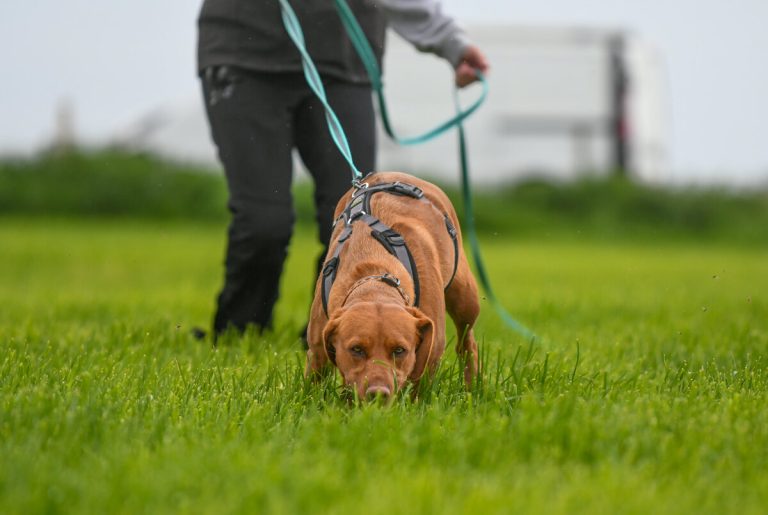
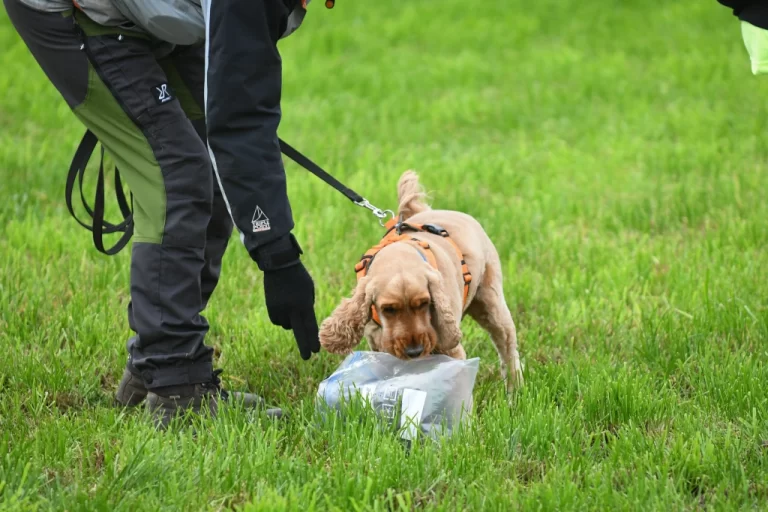
As mantrailing handlers, our job isn’t just to hold the line and follow behind. Our real skill lies in observing, interpreting, and responding to the information our dog is constantly giving us. Behaviour on the trail is communication, and learning to read it accurately can be the difference between supporting the trail or unknowingly sabotaging it.
This is where understanding behaviour indicators and using effective video analysis become powerful tools for handler development.
What Are We Really Training in Mantrailing?
At its core, mantrailing is about teaching the dog to:
- Match a specific human scent from an article
- Follow that individual trail
- Stay committed to the task despite distractions, contamination, or environmental challenges
The behaviours we want to reinforce include:
- Purposeful on trail behaviour
- Sustained focus on scent
- Staying on the scent and making decisions without guessing
The key is knowing what they’re telling us and how to respond.
Behaviour Is Learned Through Consequence
Dogs learn through reinforcement, what works, works. Even if we don’t reinforce it on purpose, cue the dog which knows you’re about to leave the room when you stand up in one way vs when you’re going to the toilet vs the WALK walk, when they get super excited!
Why? Because one of those experiences has far more reinforcement attached to it.
The same applies on the trail.
Your dog doesn’t just follow scent, they follow with purpose and a plan, shaped by:
- What you reinforce through the set up of the trail
- How you handle the line
- How you respond to uncertainty
- When you step in (and when you don’t)
Your behaviour as a handler directly influences theirs.
Key Behaviour Indicators Every Mantrailing Handler Should Learn to Read
1. Line Tension: The Conversation You’re Holding
The long line is not just a safety tool, it’s a feedback loop.
- Steady, consistent tension = Confidence in scent, commitment to direction
- Light but purposeful tension = Lower concentration scent, careful processing
- Slack line with wandering movement = Uncertainty, loss of primary scent, or decision making
The long line often mirrors the dog’s certainty. If you’re not paying attention to it, you’re missing half the conversation. Especially when reviewing videos back, you can see the line tension change on videos when it dips or suddenly becomes taunt.
2. Head Carriage: Where Is the Scent Coming From?
Head position can tells us how the dog is sourcing scent, not whether they’re right or wrong.
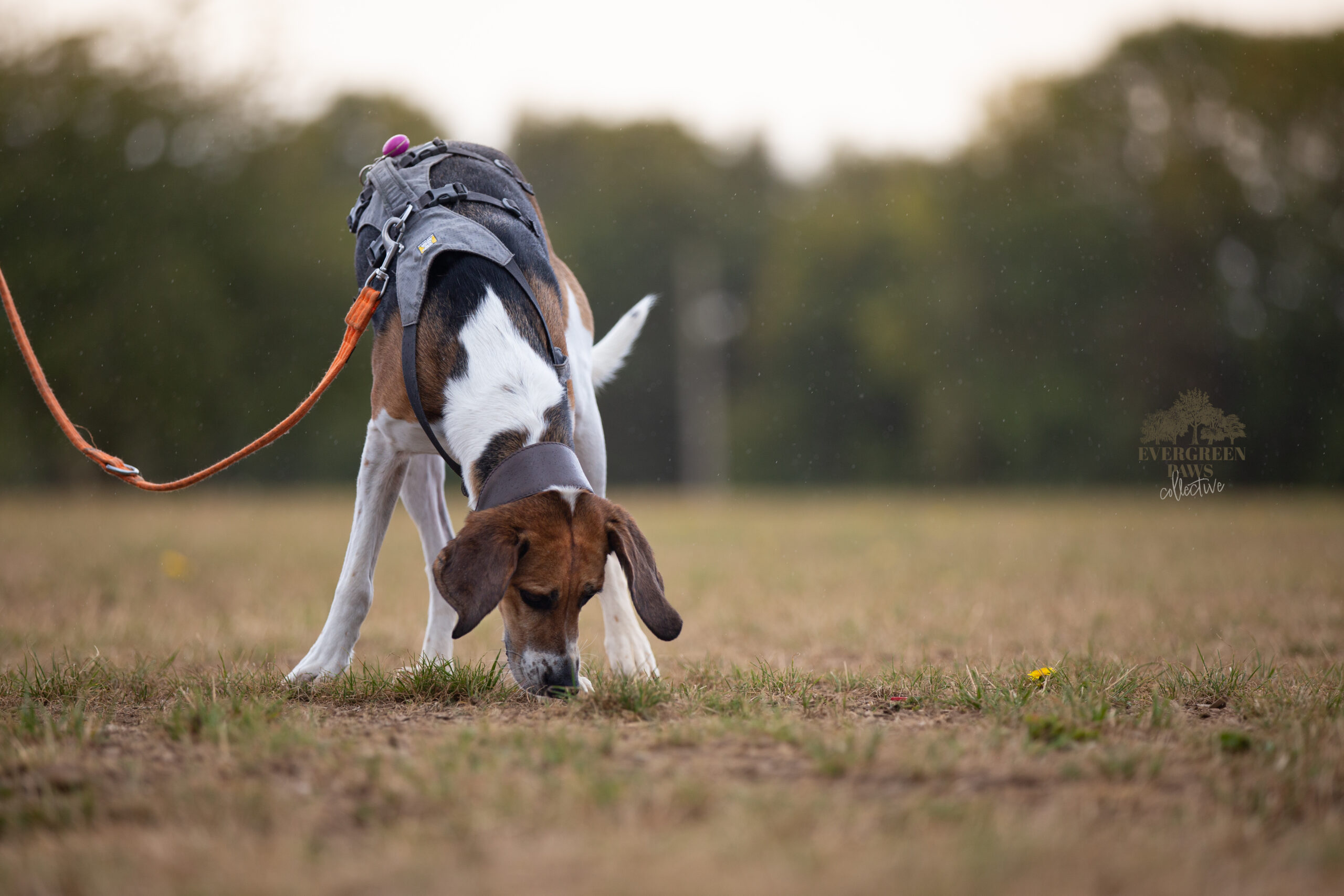
- Low nose (ground to knee height) = Ground scent, pooling scent, heavier contamination
- Mid-level nose (knee to waist height) = Lifted trail scent, drifted scent
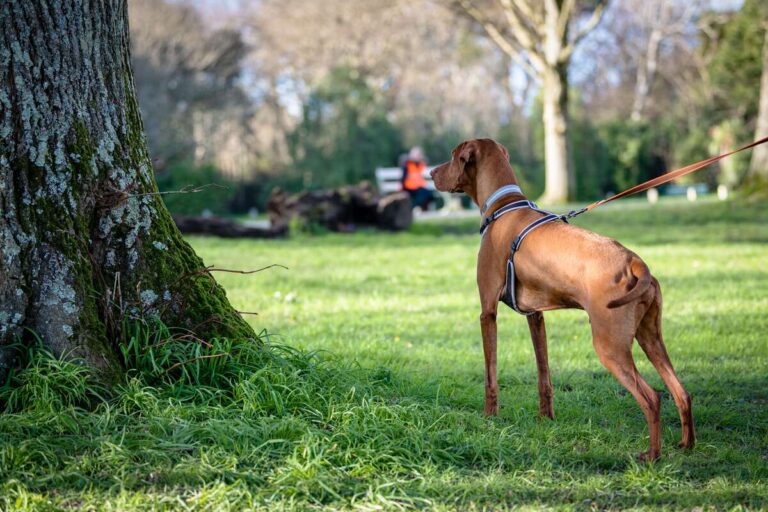
- High nose (chest to head height) = Airborne scent, wind movement, shifting scent picture
This isn’t “good vs bad”, it’s context. Head carriage helps you understand scent availability in that moment, and can indicate if the dog is on the trail or hunting for it.
3. Tail Carriage and Wag: Emotional and Cognitive State
The tail provides insight into:
- Arousal
- Confidence
- Emotional load
- Information processing
Tail position:
- Low or tucked = uncertainty, conflict, stress
- Mid-level/neutral = functional working state
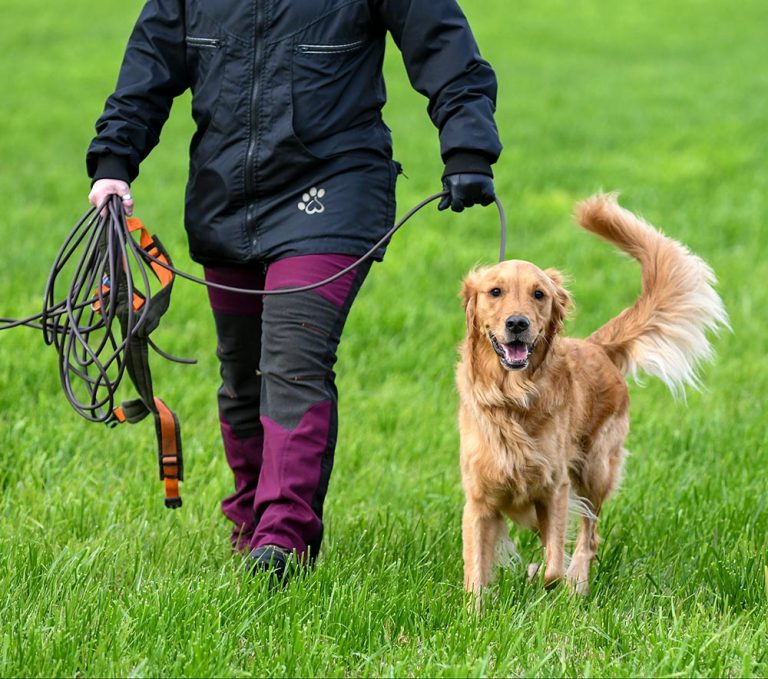
- High/flagging = high arousal, strong scent, proximity to subject
Tail wag matters too:
- Fast, tight wag = intensity, high arousal, possible frustration
- Slow, loose wag = confidence, emotional stability
Always read the tail with the whole dog:
- Spine tension
- Breathing
- Speed
- Line tension
Breed, structure, and docking all affect tail expression, so you need to know your breed and how they communicate as well as how that individual communicates. If your instructor is not learning about your dog and their traits, then you need to question why.
4. Rhythm and Gait: Follow the Changes, Not the Absolutes
Movement tells a story over time.
- Consistent rhythm = following scent
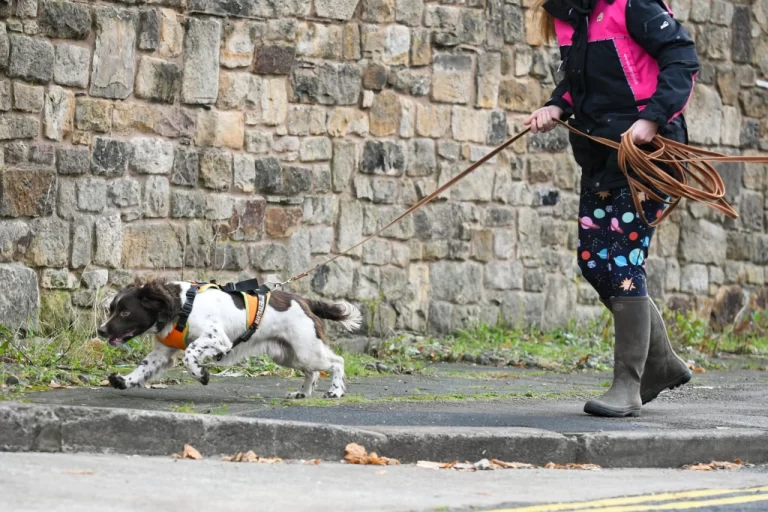
- Stop–go–stop = contamination, cross-tracks, decision-making
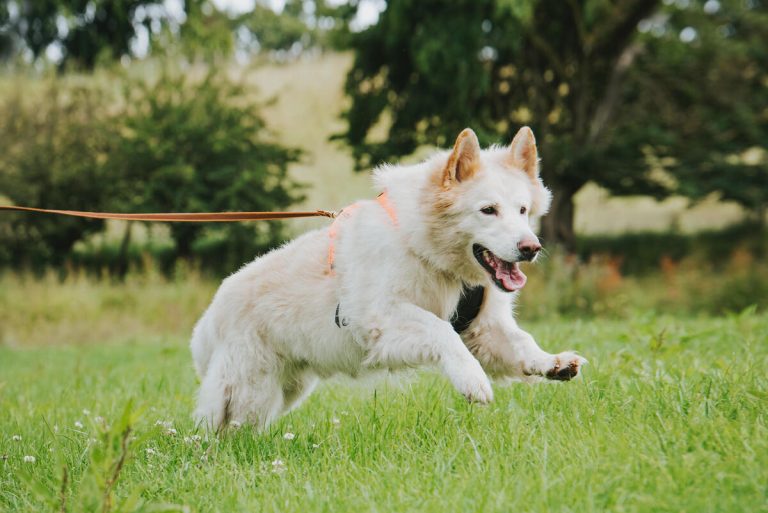
- Sudden acceleration = increased scent concentration
- Sudden slow-down = loss, transition, or scent change
It’s not the behaviour itself, it’s the change that we are watching for and aiming to read. This is a broad category and you need to really hone in your dogs emotional change, as well as their behaviour on the scent. Knowing where the trails are and where the trail was set will help you identify the behaviour you are seeing in conjunction with the trail.
Don’t jump to testing you and your dog if you cannot read the dog when you know where the trail is.
I even look for the handler coming into and out of frame, if my paced stayed the same and they come into frame on the camera suddenly then the pace changed on the dog.
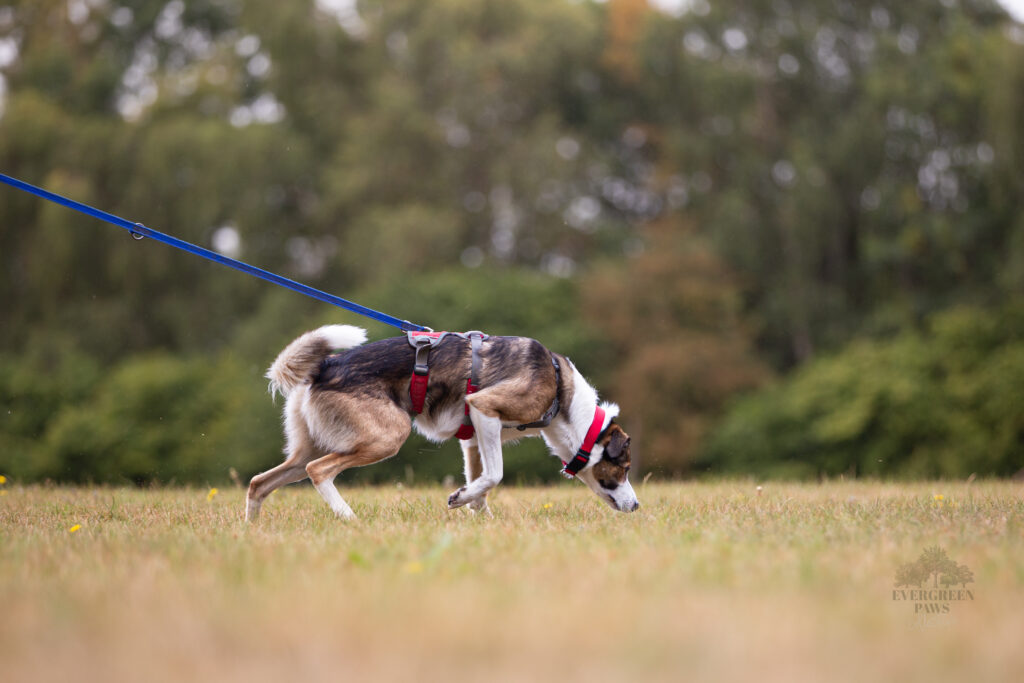
Positive vs “Negative” Behaviour: Reframing the Way We Learn
We tend to fixate on obvious changes, the moments where things look like they go wrong. We can’t help it, we are a species which look for change rather than the things which are “normal”. So we tend to get hung up on what we believe is “negative” behaviour when our dogs are trailing, and really don’t focus on the positive behaviour when the dog is actually on the trail. Which seems mad, but many teams cannot read the on trail behaviour indicators as well as off trail behaviour.
But what if the real learning lies in understanding:
- What on trail behaviour looks like for your dog
- How subtle changes build before a problem shows up
If you don’t know your dog’s normal working picture, you won’t recognise meaningful deviations from it. Which is why video analysis is so important, even if you are an experienced team. Because on the trail we won’t have a short amount of time to process, record and take in the behaviour change before we are on to the next part of the trail. It can be split second learning, which isn’t east for anyone.
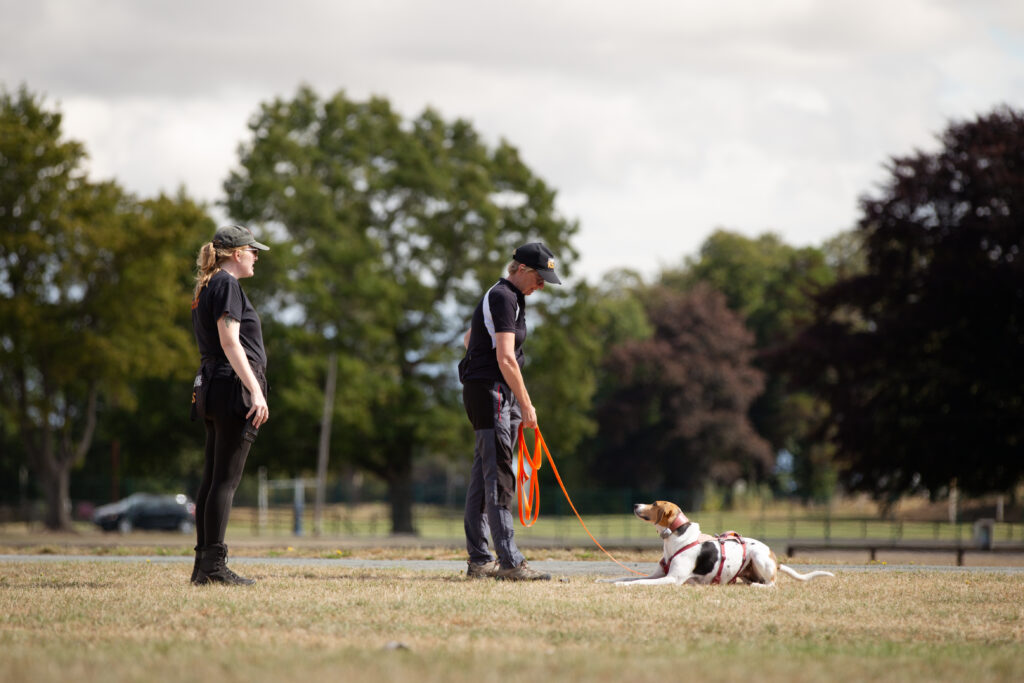
Why Video Analysis Is One of the Most Powerful Learning Tools
Video allows us to:
- Slow things down
- Remove emotional pressure
- Re-watch moments we missed in real time
The most effective way to analyse trail footage is:
- Watch once for the overall flow
- Watch again focusing on specific behaviour indicators
- Observe both dog and handler together
Patterns become clearer. Small tells become obvious. Handler habits emerge.
Video analysis helps handlers:
- Improve timing
- Reduce unnecessary interference
- Build confidence in reading behaviour
- Develop a deeper understanding of scent work
It turns experience into intentional learning. We actually spot things and learn them, not just assume on something. I see a marked difference in the handlers once they start to take time to review their videos.
I didn’t get as good as I am by just doing, I took time to review videos, spot mistakes and be critical of myself without letting that energy go down the line to the dogs. Because in the moment I cannot learn with emotion, but when home and a large gin in hand I can review, analyse and really take in the learning that happened at the time.
Final Thoughts
Mantrailing isn’t just about where the dog goes, it’s about how they get there.
Learning to read behaviour indicators is a skill that takes time, practice, and reflection. Video analysis accelerates that learning by giving you the chance to truly see what your dog is communicating.
The better we get at reading our dogs, the better partners we become on the trail.
If you want to develop this skill further, structured video analysis and guided learning can make all the difference.
Check out the recording of the Video Analysis Workshop in the Mantrailing Membership as a paid for webinar, or join me for one in person.